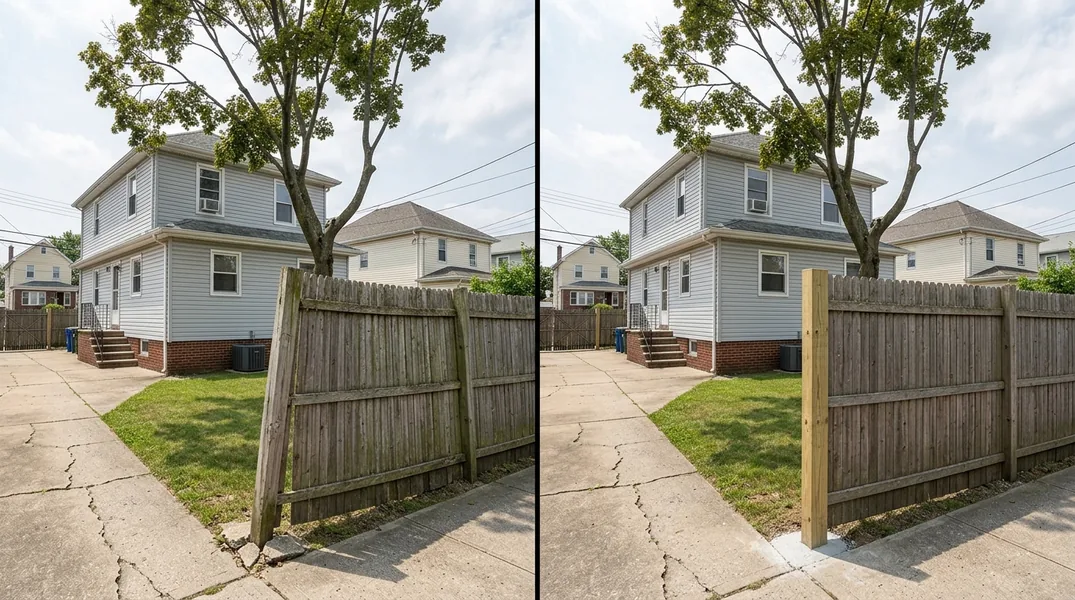
The Leaning Fence Problem in New York City
If you've noticed your fence tilting, leaning, or slowly shifting out of plumb, you're not alone. Homeowners across New York City deal with this frustrating issue every year, and it's rarely just a cosmetic problem. A leaning fence is often a warning sign that something more serious is happening beneath the soil line, where the real damage takes root.
The causes of fence lean are predictable and, fortunately, preventable with the right knowledge and intervention. Whether you have an older Wood & Privacy Fence Installation or a newer structure, understanding what makes fences lean will help you protect your investment and keep your property secure. In this guide, we'll walk you through the main culprits, why they matter, and what you can do about them.
Frost Heave: How Winter Pushes Your Fence Posts Out of Plumb
Frost heave is one of the most common reasons fences lean in northern climates like New York City. When soil freezes and thaws repeatedly during winter and spring, it expands and contracts in ways that can lift fence posts upward and shift them horizontally. This cycle is relentless, and even a properly installed fence can begin to lean after several harsh winters.
The problem starts when moisture in the soil around your fence post freezes. As ice crystals form, they push upward with surprising force, sometimes lifting a post several inches. When the ice melts, the post settles back down, but rarely in its original position. Over multiple freeze-thaw cycles, the post gradually shifts, and the entire fence line follows. Posts that are set too shallow or in poorly draining soil are especially vulnerable to frost heave damage.
The best defense against frost heave is proper post installation. Posts should be set deep enough (typically 3 feet for most residential fences) and in well-draining soil or concrete that extends below the frost line. If your fence is already leaning due to frost heave, contact New York City Fence for a free estimate to discuss whether the posts can be reset or if replacement is necessary. Call us at (917) 994-6008 to schedule an inspection.
Wet Fill and Poor Drainage: Silent Fence Killers
Many homeowners don't realize that the fill material around their fence posts plays a critical role in how long those posts will last and how straight they'll stay. When soil around a fence post remains wet for extended periods, it becomes soft and unstable, unable to support the post's weight and the lateral forces from wind or snow load. Over time, the post sinks unevenly, and the fence leans.
Wet fill is especially common in New York City properties where grading is poor, where underground water accumulates, or where dense clay soil doesn't drain well. If you've noticed your fence leaning more noticeably after heavy rain or snowmelt, poor drainage is likely the culprit. The soil becomes compacted and waterlogged, losing its structural integrity and allowing posts to settle unevenly.
The fix requires addressing both the immediate problem and the underlying cause. In some cases, improving site drainage by regrading, adding French drains, or installing permeable fill around the post base can stabilize the fence. In other cases, posts may need to be reset in properly draining material or concrete. A professional inspection can determine which approach makes sense for your property.
Rotted Fence Post Repair: Addressing Wood Decay Before It's Too Late
Wood rot is another primary reason fences lean, and it's often hidden from view until the damage is severe. When fence posts absorb water and remain damp, wood-decaying fungi begin to break down the cellulose in the wood fibers. The post loses structural strength, becomes soft or spongy, and can no longer support the fence panels or resist lateral movement. A rotted post may look solid on the outside while being hollow or crumbly on the inside.
The early signs of rot include dark discoloration, soft spots when you press on the wood, or a spongy feeling at the base of the post. If you notice any of these signs, don't wait. Rot spreads quickly, and a single compromised post can eventually cause the entire fence section to fail. Regular maintenance, including proper sealing and painting of wood posts, can prevent rot from starting. However, once rot has begun, the post must be replaced.
Rotted fence post repair typically involves removing the damaged post and installing a new one, ideally using pressure-treated lumber or a more rot-resistant wood species. Setting the new post in concrete and ensuring good drainage around the base will extend its lifespan significantly. If you suspect rot in your fence, reach out to us for a professional assessment.
Leaning Fence Repair: When to DIY and When to Call a Professional
Small adjustments to a fence that's slightly out of plumb might be manageable for a skilled homeowner, but most leaning fence repair work should be handled by professionals. Resetting a fence post requires proper equipment, knowledge of local frost lines, understanding of soil conditions, and the ability to ensure posts are truly plumb and set to the correct depth. A mistake can result in the fence leaning again within a season or two.
Professional leaning fence repair begins with a thorough site inspection to identify the root cause of the lean. Is it frost heave, wet fill, rot, or a combination of factors? Once the cause is identified, the repair strategy can be tailored to address the specific problem and prevent it from recurring. This might involve resetting posts, improving drainage, replacing rotted wood, or reinforcing weak sections.
If your fence is leaning and you're unsure what's causing it, contact New York City Fence for a free estimate. Our team has decades of experience diagnosing and fixing leaning fences throughout the city. Call (917) 994-6008 to book an inspection.
Preventing Fence Lean: Best Practices for Long-Term Stability
The best approach to leaning fences is prevention. When you install a new fence, whether it's Wood & Privacy Fence Installation, Vinyl & PVC Fence Installation, Chain Link Fence Installation, or Aluminum & Ornamental Iron Fencing, insist on proper installation standards. Posts should be set below the frost line, in well-draining soil or concrete, and installed plumb using a level. The base of the post should be protected from standing water through proper grading and drainage.
Regular maintenance also extends fence life and catches problems early. Inspect your fence at least twice a year, looking for signs of lean, rot, loose fasteners, or drainage issues. Seal and paint wood fences every few years to protect against moisture infiltration. Clear debris and leaves from around the fence base to allow air circulation and prevent water from pooling. These simple steps can add years to your fence's life and prevent costly repairs down the road.
If you're planning a new fence installation or need advice on maintaining your existing fence, New York City Fence is here to help. We've served homeowners and businesses throughout the region with expert installation and repair services. Contact us today for a free estimate or call (917) 994-6008 to discuss your fence needs.
Looking for a professional fence contractor in New York City? New York City Fence responds fast for all your fence needs.
Get a Free Quote