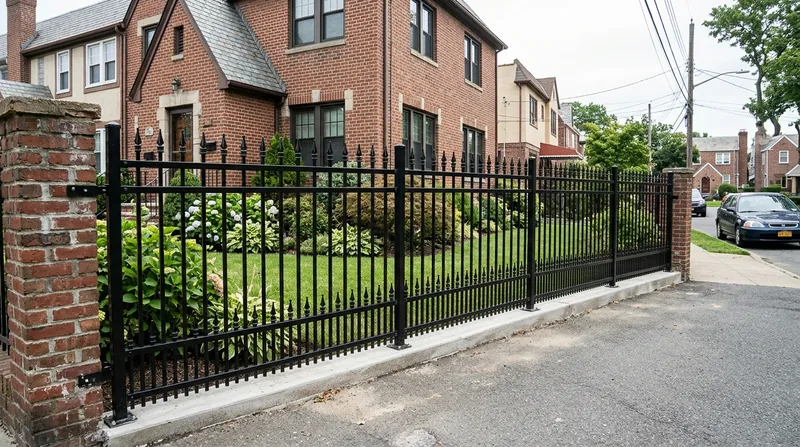




Aluminum fence installation in New York City calls for a material that stands up to bay salt air, winter road salt, and freeze-thaw cycles that heave posts and crack welds. Rowhouse stoops in Brooklyn, front gardens in Queens, and pool enclosures across the outer boroughs need fencing that looks clean and stays rust-free for years without the maintenance burden of wood or the brittleness of vinyl in coastal cold. Ornamental iron and powder-coated aluminum panels deliver that premium appearance while resisting the corrosion that degrades galvanized chain link and the wood rot that cuts short a cedar fence's life. We install racked panels on sloped lots, set posts in concrete below the frost line, and spec welds and hardware that handle the salt-laden air off Jamaica Bay and the South Shore. Whether you're securing a pool, framing a front stoop, or defining a backyard line, aluminum and ornamental iron earn their cost through durability and low upkeep in this climate.
Why Aluminum and Ornamental Iron Fencing Matter in New York City's Salt-Heavy Environment
New York City's proximity to the Atlantic, Jamaica Bay, and the East River means salt air and winter road salt corrode bare steel and galvanized finishes faster than most homeowners expect. Cedar stockade and pressure-treated pine, the workhorses of backyard privacy fencing, develop rot at the post line within five to seven years when moisture sits at ground level through thaw cycles. Vinyl can become brittle in sustained cold and crack under snow load. Powder-coated aluminum and properly welded ornamental iron panels resist that salt corrosion, stay structurally sound through nor'easters and tropical-storm remnants, and require only an occasional rinse rather than staining or sealing.
- Posts set in concrete below the frost line prevent heave and tilting during winter freeze-thaw cycles common to New York City winters.
- Powder-coated finishes on aluminum panels resist salt spray and road salt better than bare galvanized or painted surfaces.
- Welded joints on ornamental iron do not loosen or separate under wind load and snow weight the way bolted assemblies can fail.
- Racked installation on sloped yards (common in parts of the Bronx and Staten Island) keeps panels plumb and aligned despite uneven terrain.
- Aluminum weighs less than steel or wrought iron, reducing labor and structural demand on posts in narrow Brooklyn and Queens yards.
In a climate where moisture, salt, and freeze-thaw dominate fence failure, aluminum and ornamental iron outperform wood and vinyl over a ten to fifteen year span.
Key info: Bay Ridge and Dyker Heights homeowners with front stoops and wrought-iron railings know that ornamental iron requires proper welding and powder coating to resist the salt air off the Narrows. We use the same standard for fence panels and gates. Marine park and South Shore properties near Jamaica Bay face the heaviest salt exposure; aluminum and coated iron are the materials that hold up.
For detailed guidance on whether aluminum, ornamental iron, or another material fits your property and budget, contact us for a free estimate.
How We Install Aluminum and Ornamental Iron Fencing in New York City
Installation begins with a site walk to assess slope, soil type, utilities, and setback requirements from the property line. We call 811 for a utility locate before digging any post holes, locate existing underground lines, and establish the fence line from your survey or your marked boundary. Posts are set in concrete below the local frost line (typically 3 to 4 feet in New York City), tamped firm, and allowed to cure before panel installation. On sloped lots we rack the panels (step them in height) so they remain plumb despite the grade change. Aluminum panels are hung with hardware rated for salt spray, welds on ornamental iron are cleaned and inspected, and all fasteners are stainless steel or powder-coated to prevent rust staining.
- We obtain and verify your existing survey, or work from the boundary line you identify and mark on the property.
- Call 811 for a utility locate and mark all underground lines before we begin post-hole digging.
- Dig post holes below the frost line, set posts in concrete, and allow proper cure time before hanging panels.
- Install panels plumb and level, using racked installation on slopes to keep the fence line visually aligned.
- Inspect all welds, apply final coatings if needed, and test gate hardware for smooth operation and proper closure.
The entire process typically takes one to two weeks from layout to completion, depending on fence length and site conditions.
Example: A Bayside, Queens homeowner with a 120-linear-foot pool enclosure on a level lot had the fence installed in five working days. A Riverdale, Bronx property with a 150-linear-foot ornamental iron fence on a 20-degree slope required racked installation and took eight days due to post-hole depth and terrain. Both included 811 utility locates and concrete cure time.
For more information on pool fence installation or gate installation and repair, visit those service pages.
| Approach | Description | Best for |
|---|---|---|
| Powder-Coated Aluminum Panels | Lightweight aluminum extrusions with factory powder coat in black, white, bronze, or custom colors. Pickets or solid panels. Minimal maintenance. | Front gardens, pool enclosures, properties near salt water where rust resistance is critical. Homeowners seeking low-upkeep fencing. |
| Welded Ornamental Iron | Steel pickets and rails welded into panels, then powder-coated. Traditional wrought-iron aesthetic with modern finishes. Heavier and more rigid than aluminum. | Rowhouse stoops, heritage properties, front railings where period appearance matters. Properties willing to accept slightly more weight and cost for visual impact. |
| Racked Installation on Slopes | Panels stepped in height to follow grade changes, keeping pickets plumb and horizontal rails level despite uneven terrain. | Properties in the Bronx, parts of Staten Island, or Queens with moderate to steep grades. Maintains appearance and structural integrity on sloped lots. |
| Stepped Installation (Pickets Follow Grade) | Pickets follow the slope of the land; rails step up in height. Creates a sawtooth profile but simpler to install and sometimes preferred for informal aesthetics. | Residential backyards where visual perfection is less critical and budget is a concern. Easier maintenance and repair. |
Aluminum and Ornamental Iron Fencing Cost in New York City: What to Expect
Aluminum fence installation in New York City starts at $42 per linear foot for basic aluminum picket panels with standard posts and concrete footings. Ornamental iron (welded steel) runs higher, typically $55 to $85 per linear foot depending on design complexity, panel height, and whether gates are included. A 120-linear-foot aluminum fence around a pool or front garden runs roughly $5,000 to $6,500 installed; ornamental iron for the same span costs $6,500 to $10,200. Factors that increase cost include custom colors or finishes, taller panels (6 feet versus 4 feet), racked installation on sloped terrain, ornamental caps or trim details, and multiple gates. Posts set in concrete, utility locates, and site cleanup are included in these estimates. Narrow Brooklyn and Queens lots may require extra care in access and staging, which can add to labor. See the full pricing page for detailed breakdowns by material and scope.
Getting two or three estimates from local contractors is wise, because site conditions (soil type, slope, utility conflicts, setback restrictions) vary block by block across New York City and directly affect the final cost. A property with sandy fill near Jamaica Bay may require deeper post holes; rocky glacial till in the North Bronx or Riverdale may demand post-hole drilling rather than digging. Always provide the contractor with a survey or clear boundary markers so they can give an accurate linear-foot count and account for gates, corners, and transitions.
What to Look for When Hiring a Fence Contractor Near Me in New York City
Finding a trustworthy aluminum or ornamental iron fence contractor in New York City means checking a few key details before you sign. Verify that the contractor is fully insured with general liability and workers' compensation coverage, and ask for a certificate of insurance naming your property as additional insured. Fence licensing and contractor registration requirements vary by municipality within New York City and surrounding counties, so ask your local building department whether a permit is required for your fence and whether a licensed general contractor is mandated by your jurisdiction. Many properties in master-planned communities and HOA neighborhoods have deed restrictions on fence height, material, or color, so confirm your design with your HOA before work begins. Get multiple estimates in writing, with a clear scope of work, material specs, and timeline. Check references from recent jobs in your neighborhood; a contractor familiar with Brooklyn rowhouses or Queens colonial properties will know the local soil, frost depth, and salt-spray concerns that affect your fence's longevity.
- Ask for proof of general liability and workers' compensation insurance, and request a certificate of insurance before work starts.
- Call your local building department to learn whether a permit is required and whether fence licensing applies in your jurisdiction.
- Review your HOA rules or deed restrictions for fence height, material, color, and setback requirements before you finalize a design.
- Obtain written estimates from at least two contractors, including material specs, post spacing, post depth, and completion timeline.
- Ask for references from properties in your neighborhood or a similar setting (slope, salt exposure, soil type) completed within the past two years.
- Confirm that the contractor will call 811 for a utility locate and verify all underground lines before digging any post holes.
A local contractor who understands New York City's freeze-thaw winters, salt-air corrosion, and the specific soil and terrain of your neighborhood will deliver a fence that holds up and looks right for years. Contact us for a free estimate and we'll walk your property, discuss your goals, and provide a transparent quote with no obligation.
Aluminum & Ornamental Iron Fencing in New York City: Pricing Guide
| Service | Price | Details |
|---|---|---|
| Aluminum Picket Fencing | Starting at $42/ft | Powder-coated aluminum panels, posts in concrete, standard 4-foot height, includes labor and materials for level terrain |
| Ornamental Iron (Welded Steel) Fencing | Starting at $55/ft | Welded steel pickets and rails, powder-coated finish, posts in concrete, 4 to 6-foot panels, increases with custom design or height |
| Racked Installation on Slopes | Add $8-$15/ft | Panels stepped to follow grade changes while keeping pickets plumb, adds labor and material complexity on uneven terrain |
| Gates (Single or Double) | $600-$1,200 each | Hardware, hinges, and self-closing latch included; ornamental iron gates cost more than aluminum; custom sizes and automatic operators quoted separately |
| Estimate and Site Visit | Free | We assess your property, measure the fence line, review setback and HOA rules, and provide a written estimate within 24 hours at (917) 994-6008 |
Indicative pricing, the exact cost depends on square footage, finish, and site access. Free personalized estimate within 24h at (917) 994-6008.


