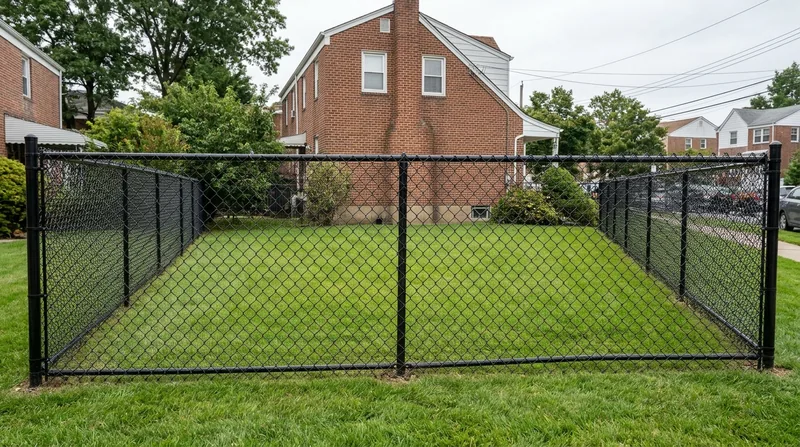




Chain link fence installation in New York City is the workhorse choice for homeowners who want durability, transparency, and real value. From the narrow backyard lots of Brooklyn and Queens to the wider properties of Staten Island and Westchester, chain link handles freeze-thaw cycles, salt air, and heavy wet snow loads better than any other fence per dollar spent. Galvanized steel mesh resists corrosion; black vinyl-coated chain link blends into the landscape and hides rust. When posts are set in concrete, corners are braced, and mesh is properly tensioned, a chain link fence stays tight through twenty winters of heaving ground and nor'easter wind gusts that would push lighter panels over.
Why Chain Link Fence Installation Matters in New York City's Freeze-Thaw Climate
New York City winters heave fence posts out of the ground. Frost penetrates below the frost line, expands, and lifts anything not set deep and in concrete. Chain link's strength lies in its ability to flex and recover. A properly tensioned mesh and braced corners can absorb the movement that cracks wood boards and bends vinyl panels. Salt spray from Jamaica Bay and winter road salt corrode uncoated metal fast, which is why galvanized or vinyl-coated chain link outperforms bare steel in neighborhoods like Bay Ridge, Marine Park, and Tottenville.
- Freeze-thaw cycles heave posts; concrete footings and proper depth prevent uplift and sagging.
- Salt air and road salt corrode bare steel; galvanized or vinyl-coated mesh resists corrosion for decades.
- Nor'easters and tropical-storm remnants push fence lines; anti-sag bracing at corners keeps mesh tight.
- Heavy wet snow loads press on mesh; correct gauge (typically 6 or 9) and proper tension prevent permanent deformation.
These are the forces that fail fences in New York City, and chain link addresses each one by design.
Key info: A homeowner in Bayside, Queens, installed a galvanized chain link fence around a 40x100 lot in 2005. Twenty winters later, the posts are still plumb, the mesh still tight. A cedar fence installed the same year needed complete replacement at the ten-year mark. Chain link cost less up front and has outlasted it by a decade.
For permit requirements and height restrictions, check with your local New York City building department or community board. Rules vary by neighborhood and setback from the property line. Fence repair and maintenance extend the life of chain link, but the material itself requires little beyond occasional tension adjustment and rust-spot touch-up.
How Chain Link Fence Installation Works in New York City
Installation begins with a site walk and utility locate. New York 811 utility locates are required by law before you dig post holes; call 811 at least two business days before digging. We mark the fence line, set posts 6 feet apart (standard for residential; 8 feet for commercial or longer spans), dig holes below the frost line (typically 3 to 4 feet deep in New York City), and set posts in concrete. The concrete collar prevents frost heave and keeps posts plumb through winter cycles. Once posts are cured, we stretch mesh using a tension band and stretcher bar system, ensuring even tension across the panel so the mesh stays flat and won't sag in wind or snow load.
- Call 811 for a free utility locate at least two business days before we begin digging.
- We mark the fence line and set posts 6 feet apart, or 8 feet for commercial or longer residential spans.
- Posts are dug below the frost line and set in concrete to prevent frost heave and movement.
- Mesh is stretched using tension bands and a stretcher bar, creating even tension so panels stay flat and tight.
- Corner bracing with anti-sag hardware keeps the fence rigid in wind and under snow load.
- Black vinyl-coated or galvanized mesh is installed and secured to posts with rail clips and tension wire.
The entire process takes 1 to 3 days depending on lot size and soil conditions. Rocky glacial till in the North Bronx and Riverdale slows digging; sandy fill near Jamaica Bay and the South Shore drains fast and requires deeper footings to prevent settlement.
Example: A homeowner in Howard Beach, Queens, needed a 200-foot chain link fence around a side yard that backed onto a commercial lot. Sandy soil and high water table meant we dug 4 feet deep and poured concrete collars 2 feet tall to keep posts above groundwater. Black vinyl-coated 6-gauge mesh with corner bracing went up in two days. Five years later, no rust, no sag, no movement. The sandy soil that looked like a problem actually drained water away from the posts.
Learn more about gate installation and repair if you need an opening for vehicle or pedestrian access.
Chain Link Fence Installation Methods and Mesh Options
| Approach | Description | Best for |
|---|---|---|
| Galvanized 6-gauge | Hot-dipped zinc coating, silver-grey color, rust-resistant for 15+ years in New York City's salt environment. | Driveways, commercial lots, and side yards where appearance is secondary to durability and cost. |
| Black vinyl-coated 6-gauge | Galvanized steel with polyvinyl chloride coating, black finish, hides underlying metal and blends into landscapes. | Residential backyards, pet containment, and front yards where a finished appearance matters and salt spray is high. |
| 9-gauge mesh (lighter duty) | Thinner wire, lower cost, adequate for pet containment and temporary fencing, less wind resistance and snow load capacity. | Short-term installations, small pet areas, and budget-conscious projects where heavy snow or wind load is not a factor. |
| Privacy slats or windscreen | Rigid PVC or fabric inserts woven into mesh, solid color (tan, green, or white), blocks sight lines and reduces wind load on the fence. | Residential yards where privacy is desired, commercial perimeters, and lots where wind buffering protects adjacent properties. |
Mesh size is measured in inches (1-inch, 1.25-inch, or 2-inch diamonds). Smaller mesh holds smaller animals and debris; larger mesh offers more transparency and lower cost. For most New York City residential applications, 1-inch or 1.25-inch mesh with 6-gauge wire is the standard. Heavier 4-gauge is available for high-impact or commercial settings but is rarely necessary for residential fences.
Chain Link Fence Installation Cost in New York City: What to Expect
Chain link fence installation in New York City starts at around $16 per linear foot for galvanized 6-gauge mesh with standard posts and concrete footings. Black vinyl-coated mesh runs slightly higher, typically $18 to $22 per linear foot. A 150-foot residential installation with standard spacing and no obstacles might fall in the $2,400 to $3,300 range. Several factors move the price up: rocky soil that requires jackhammer work or hand-digging (common in Riverdale and the North Bronx), sandy or wet soil near Jamaica Bay that demands deeper footings and concrete collars, narrow side yards that limit equipment access, and existing vegetation or structures that need to be worked around.
Getting 2 or 3 estimates before you commit gives you a clear picture of what the work costs in your neighborhood and what's included. Some installers include corner bracing and tension hardware; others charge separately. Ask whether the estimate covers utility locates (they should be free through 811), concrete, and cleanup. See our full pricing page for detailed breakdowns by mesh type and gauge.
If your fence needs post repair or replacement rather than a full install, the cost is much lower. A single heaved or rotted post in concrete runs $200 to $400 to dig out and reset, versus the full cost of new fence. Always ask whether repair makes sense before committing to replacement.
What to Look for When Hiring a Chain Link Fence Contractor Near Me in New York City
When you search for a chain link fence contractor near you in New York City, look for installers who understand the local climate and soil. A contractor who has worked in your neighborhood knows whether your lot drains well or holds water, whether the soil is rocky or sandy, and what frost depth to dig to. Verify that the contractor is fully insured with general liability and workers' compensation cover; ask for a certificate of insurance before work begins. Fence licensing in New York State is set by county and municipality, not statewide; check with your local building department to learn whether a licensed general contractor is required for your project scope and value. Get multiple estimates, check references from recent residential jobs, and ask about warranty on materials and labor. If your property has an HOA or deed restrictions, confirm that chain link height, color, and gauge comply with your community's rules before signing a contract.
- Ask for proof of general liability and workers' compensation insurance, and request a certificate of insurance before work starts.
- Check your local New York City building department website to learn whether a permit is required and what fence height and setback rules apply in your neighborhood.
- If you live in a master-planned community or have an HOA, verify that chain link material and height are permitted before you commit.
- Get at least two or three written estimates that itemize mesh type, gauge, post spacing, concrete depth, and corner bracing.
- Ask for references from homeowners in your neighborhood or similar lots, and follow up with calls or visits if possible.
- Confirm that the 811 utility locate is included and will be called at least two business days before digging starts.
A local contractor who explains why posts need to be set deep in your specific soil, who understands freeze-thaw cycles, and who stands behind the work with a clear warranty is worth more than the lowest price. Contact us for a free estimate and we will walk your property with you, explain the site conditions, and give you a realistic timeline and price.
Chain Link Fence Installation in New York City: Pricing Guide
| Service | Price | Details |
|---|---|---|
| Galvanized 6-gauge chain link | Starting at $16/ft | Standard residential installation with concrete footings, posts 6 feet apart, tension hardware, and corner bracing included |
| Black vinyl-coated 6-gauge chain link | Starting at $18/ft | Galvanized base with polyvinyl coating for corrosion resistance and finished appearance in salt-air and freeze-thaw climates |
| Privacy slats or windscreen | Add $4 to $8/ft | Rigid PVC or fabric inserts woven into existing mesh to block sight lines and reduce wind load on the fence line |
| Difficult soil or access | On estimate | Rocky glacial till, high water table, or narrow side yards require site inspection to determine digging method and post depth |
| Travel | Included | No separate call-out or mileage fee within New York City and surrounding service areas |
| Free estimate | Free | Response within 24 hours at (917) 994-6008, no obligation to book, site walk and written quote included |
Indicative pricing, the exact cost depends on square footage, finish, and site access. Free personalized estimate within 24h at (917) 994-6008.


