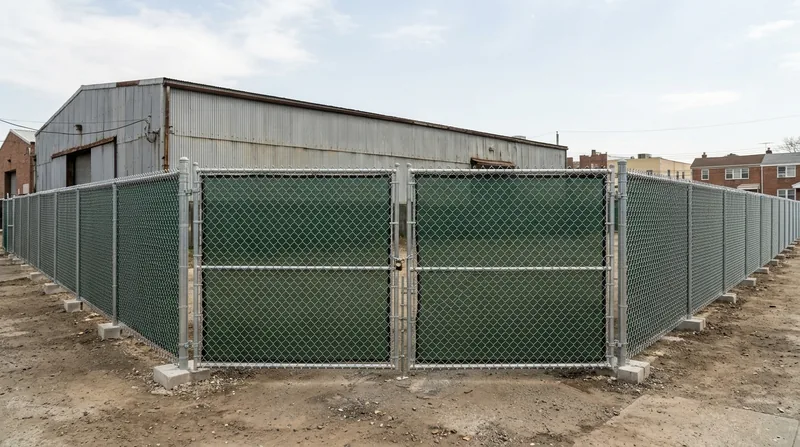




Construction sites, retail properties, and municipal projects across New York City need commercial fence installation that works fast, meets code, and holds up to the rigors of active jobsites. Whether you're securing a demolition site in Brooklyn, staging a temporary perimeter in Queens, protecting pedestrians near a Manhattan renovation, or installing silt fence along a waterfront project in Staten Island, the fence has to be reliable, compliant, and installed right the first time. Freeze-thaw winters, nor'easters, and heavy wet snow loads put pressure on temporary and permanent commercial installations alike. We install commercial chain link fence, temporary construction fence, and silt fence for builders, general contractors, and property managers across the five boroughs and nearby Long Island and Westchester. Fast installs, code-aware layouts, and volume pricing mean your project stays on schedule.
Why Commercial and Temporary Fencing Matters on New York City Jobsites
A jobsite fence is not a boundary marker. It is a safety barrier, a security perimeter, an erosion control measure, and often a legal requirement. The New York City Department of Environmental Protection, the Buildings Department, and local community boards enforce setback, height, and material standards that vary by borough and by project type. A temporary construction fence that does not meet code can shut down work, trigger fines, or expose the GC and property owner to liability. Silt fence installed incorrectly fails to contain sediment and violates stormwater permits. Chain link security fencing around active demolition or material staging must be robust enough to resist wind loads, intrusion, and weather without sagging or pulling away from posts.
- A temporary construction fence must be set back from the property line according to local DOB rules and must be inspected and maintained throughout the job.
- Silt fence requires proper post spacing, fabric overlap, and sediment removal to meet EPA and NYCDEP stormwater pollution prevention plan (SWPPP) requirements.
- Commercial chain link fencing for security must be galvanized or powder-coated to resist salt-air corrosion and road salt exposure, especially in waterfront and coastal areas.
- Gate hardware, hinges, and latches on commercial installations must be rated for high-cycle use and weather resistance.
- Posts must be set in concrete, not tamped, to handle wind and impact loads on busy sites.
Installing the fence to spec from day one prevents delays, violations, and costly repairs down the line.
Key info: Temporary construction fence in New York City often requires a Buildings Department permit and must comply with Local Law 34 (sidewalk shed and site safety requirements). Silt fence installations near wetlands or waterways in the Jamaica Bay area, the Harlem River, and along the East River must meet additional NYCDEP sediment control standards. Check with your local DOB office or the NYCDEP before breaking ground.
For detailed permit requirements and jobsite safety standards, visit the NYC Department of Buildings website.
How We Install Commercial and Temporary Fencing Across New York City
Every jobsite is different. A demolition site in Bay Ridge, Brooklyn, faces salt air and freeze-thaw heave. A construction staging area in Bayside, Queens, may need silt fence around a wetland buffer. A retail renovation in Yonkers or Mount Vernon requires a clean, secure perimeter on a tight schedule. We start with an on-site survey, verify utilities with an 811 locate, confirm setback and code requirements with the local building department or your GC, and lay out the fence to minimize interference with site operations and traffic.
- We verify all utility lines and buried infrastructure using a free 811 locate before digging any post holes.
- We confirm setback, height, and material requirements with the local DOB or your project specifications.
- We set posts in concrete at the spacing and depth required by code and soil conditions.
- We install galvanized or powder-coated chain link with tension bands and stretcher bar hardware rated for the exposure and load.
- We install silt fence with proper overlap, post spacing, and sediment removal to meet SWPPP and stormwater compliance.
- We provide a timeline and coordinate with your site schedule to minimize downtime and traffic delays.
Once the fence is up, we schedule routine inspections and repairs as needed to keep it compliant and safe through project closeout.
Example: A commercial demolition project in Howard Beach, Queens, required 400 linear feet of temporary chain link fence, silt fence along a stormwater outfall, and a double-swing gate for equipment access. Post holes hit sandy fill and required deeper concrete footings to resist seasonal heave. We completed the layout in one day, coordinated the 811 locate, and had the fence installed and inspected within 48 hours of the GC's go-ahead.
For other fencing and gate solutions on your property, see our gate installation and repair services.
Commercial and Temporary Fencing Methods: Which Approach Fits Your Jobsite
| Approach | Description | Best for |
|---|---|---|
| Temporary Construction Fence | Chain link or plastic mesh panels hung on steel or wood posts, set in concrete, typically 6 feet high, with gates for site access. | Active demolition, renovation, and construction sites; short-term perimeter security; pedestrian protection. |
| Commercial Chain Link Fencing | Galvanized or powder-coated steel mesh, 6 to 8 feet high, with tension bands and stretcher bar hardware, designed for high-impact use and weather resistance. | Long-term security around material storage, equipment yards, parking areas, and industrial sites. |
| Silt Fence | Geotextile fabric anchored to posts and buried at the base, designed to trap sediment and prevent stormwater runoff contamination. | Erosion control on new construction, demolition sites, and land disturbing activities near waterways and wetlands. |
| Commercial Security Fence with Gates | Combination of chain link or ornamental metal fencing with self-closing, self-latching gates, anti-sag bracing, and hardware rated for high-cycle use. | Retail properties, municipal facilities, and commercial sites requiring controlled access and a finished appearance. |
Commercial and Temporary Fencing Cost in New York City: What to Expect
The cost of commercial fencing in New York City depends on the type of fence, the linear footage, site access, soil conditions, and the complexity of the layout. A temporary construction fence on a flat, accessible site with good soil runs less per linear foot than a silt fence installation that requires deeper posts, fabric burial, and ongoing sediment removal. Commercial chain link security fencing with gates and high-end hardware costs more than a basic temporary mesh perimeter. Freeze-thaw heave in winter and rocky glacial till in parts of the Bronx and Riverdale can require deeper post holes and extra concrete, which raises labor cost. We provide a free site quote and respond within 24 hours so you know the real number before you commit.
Factors that move the cost up include longer linear footage, difficult access (narrow lots, tight site boundaries, proximity to active traffic), rocky or sandy soil requiring extra excavation, gate installations with operator hardware, and silt fence that requires ongoing maintenance and sediment removal through the project. Getting 2 to 3 estimates from different contractors is smart practice. Compare not just the price but the timeline, the warranty, the inspection schedule, and who handles permit coordination and 811 locates. The cheapest fence often becomes the most expensive when it fails halfway through the job.
See our full pricing overview for typical ranges and what moves the cost.
What to Look for When Hiring a Fence Contractor Near New York City
A commercial or temporary fence is a safety-critical installation. The contractor you hire must understand local code, handle permits and 811 locates correctly, and install the fence to spec under pressure and on schedule. Check that the contractor carries full insurance and workers' compensation coverage, and ask for a certificate of insurance naming your project. Always verify the specific rules with your local Department of Buildings or your project engineer before signing a contract. Some commercial and industrial sites are governed by HOA or deed restrictions that limit material, height, or color. Confirm those restrictions early.
- Ask the contractor to show proof of full insurance coverage and workers' compensation, with a certificate of insurance available on request.
- Confirm that the contractor will obtain the 811 utility locate and handle all permit applications and inspections required by your local DOB.
- Request references from similar projects in your area (demolition sites, construction staging, retail properties, or municipal facilities).
- Get a written timeline and a clear scope of work, including post-installation maintenance and repair schedules if needed.
- Ask how the contractor handles changes, delays, and weather-related shutdowns on active jobsites.
A contractor who pushes back on insurance, permits, or 811 locates is cutting corners. That cost savings will show up as fines, project delays, or safety incidents. Contact us for a free estimate and a no-obligation conversation about your jobsite requirements.
Key info: New York 811 utility locates are required by state law before digging any post holes, even on private property. Call 811 at least three business days before your fence installation date. The utility companies will mark gas, electric, water, and telecom lines at no cost. Never skip this step. Fence post holes that strike buried utilities can cause explosions, electrocution, service outages, and massive liability.
For more information on hiring and what to expect, contact us today for a free consultation.
Commercial & Temporary Fencing in New York City: Pricing Guide
| Service | Price | Details |
|---|---|---|
| Temporary Construction Fence | Free site quote | Layout and post spacing verified on-site, 811 locate included, pricing based on linear footage and site access difficulty |
| Commercial Chain Link Fencing | Starting at $35/linear foot | Galvanized or powder-coated mesh, tension hardware, concrete-set posts, material and labor for secure perimeter installation |
| Silt Fence Installation and Maintenance | Starting at $12/linear foot | Geotextile fabric, post installation, burial, and periodic sediment removal to maintain SWPPP compliance through project closeout |
| Commercial Security Gates and Hardware | Starting at $1,200 per gate | Single or double swing gates, self-closing and self-latching hardware, hinges rated for high-cycle commercial use, installation included |
| Complex or Multi-Phase Jobsite Projects | On estimate | Large sites, multiple fence types, ongoing maintenance, or coordination with active construction require on-site assessment and custom pricing |
| Travel and 811 Locate | Included | No separate mileage fee or utility locate charge within New York City and surrounding Westchester and Long Island service areas |
Indicative pricing, the exact cost depends on square footage, finish, and site access. Free personalized estimate within 24h at (917) 994-6008.


