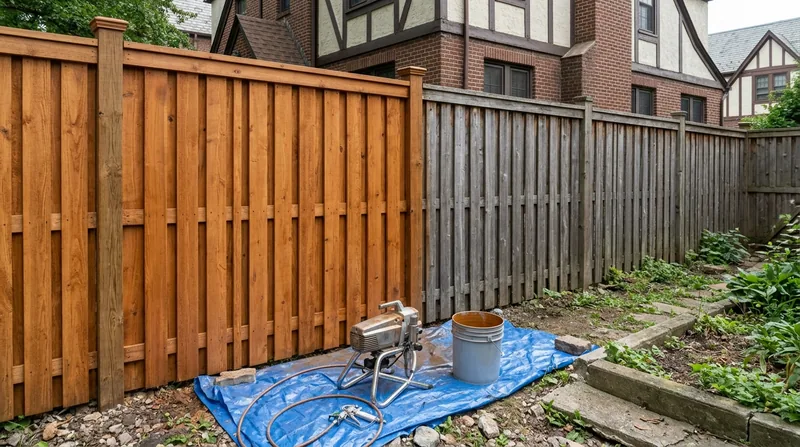




Fence staining in New York City is essential maintenance for cedar and pressure-treated wood fences exposed to the region's damp springs, humid summers, and punishing freeze-thaw winters. A properly stained and sealed fence can double its lifespan and preserve the wood's appearance through years of salt air, coastal moisture, and heavy wet snow loads that dominate the outer boroughs and Long Island. We clean, brighten, and seal cedar fences to protect them from the elements, and we tell you plainly when staining still makes sense and when the wood has deteriorated beyond saving.
Wood fences in Brooklyn, Queens, the Bronx, Staten Island, and Westchester take a beating. Moisture wicks into grain and end grain at the post line, frost heave pushes posts out of plumb, and the salt spray from Jamaica Bay and winter road applications corrode hardware and accelerate rot. Staining and sealing address the root problem: water intrusion. A quality exterior stain with a mildew inhibitor and UV blocker slows that process dramatically, but only if the wood is still sound underneath.
Our approach is straightforward: we assess the fence, clean it properly, and recommend staining only if the structural wood justifies the spend. If posts are soft, rails are split beyond repair, or the fence has less than two to three years of useful life remaining, we tell you. If the fence is solid, staining can protect it for years to come. See our fence repair page to learn when repair makes more sense than replacement.
Why Fence Staining Matters in New York City's Climate
Cedar and pressure-treated pine fences are common in the outer boroughs and on Long Island, but they are not fireproof against New York's weather. Moisture is the enemy. Rain, humidity, and groundwater vapor penetrate untreated wood, promoting rot fungi and mildew growth. In freeze-thaw cycles, water in the wood expands and contracts, splitting boards and loosening joints. Winter salt applications accelerate corrosion of fasteners and hardware, and the salt itself draws more moisture into the wood.
Staining and sealing create a protective barrier that slows water absorption and extends the life of the fence by years. The best stains also include mildew inhibitors and UV blockers, which prevent graying and discoloration common in the humid Northeast. A stained fence in Bayside, Howard Beach, or Dyker Heights will look better and last longer than an unstained one in the same conditions.
- We pressure-wash the fence to remove dirt, algae, mildew, and loose paint before staining.
- We sand or strip old stain and paint to bare wood so new stain bonds properly.
- We apply exterior-grade stain with mildew and UV protection rated for Northeast exposure.
- We seal end grain and post bases, where water intrusion is most aggressive.
- We inspect posts and rails during cleaning and flag any structural damage for repair or replacement.
These steps protect your fence through New York's damp coastal climate and extend its useful life significantly.
Key info: A six-foot cedar privacy fence in Brooklyn or Queens typically needs restaining every 3 to 5 years, depending on sun exposure and proximity to salt water. Fences on the north side of properties, shaded by trees, may go longer between applications. Full sun exposure on the south and west sides accelerates weathering and demands more frequent maintenance.
For more detail on when fencing itself needs repair or replacement, visit our wood privacy fence installation page.
How We Prepare and Stain Your Fence
Proper preparation is the difference between a stain job that lasts three years and one that lasts five. We do not cut corners. We start with a thorough cleaning to remove years of dirt, mildew, and weathering, then assess the wood for rot, splits, and fastener corrosion. Only then do we sand or strip and apply stain.
The process is labor-intensive, but it ensures the stain adheres properly and protects the wood for as long as possible. A fence that looks clean is not the same as a fence that is ready to stain; we prepare it so the stain can do its job.
- We inspect the entire fence for structural damage, loose boards, and failed fasteners.
- We pressure-wash at low pressure to remove algae, mildew, and surface dirt without damaging the wood.
- We sand or chemically strip old stain and paint to expose bare wood.
- We fill gaps and cracks with exterior-grade wood filler where needed for appearance and water resistance.
- We apply stain in two coats, working from top to bottom to avoid drips and ensure even coverage.
- We pay special attention to end grain, post bases, and rail joints where water intrusion is most likely.
This methodical approach takes more time than a quick brush job, but it is the only way to get a finish that lasts.
Example: A 100-linear-foot cedar board-on-board fence in Whitestone with accumulated mildew and old stain typically takes 2 to 3 days from cleaning through final coat. A smaller 40-foot picket fence in Riverdale might take one day. We provide a timeline on your estimate so you know what to expect.
Related service: if your fence needs structural repairs before staining makes sense, see our fence post repair and replacement page.
| Approach | Description | Best for |
|---|---|---|
| Pressure wash and seal only | Clean the fence and apply a clear or lightly tinted sealer without stripping old stain. | Fences with sound stain or paint still in place and no heavy mildew or weathering. |
| Strip, sand, and stain | Remove old stain and paint, sand to bare wood, and apply new exterior stain with UV and mildew protection. | Fences with failed or peeling stain, heavy weathering, or color change desired. |
| Chemical strip and stain | Use environmentally safer chemical stripper to remove old stain, then sand lightly and apply new stain. | Older fences with multiple layers of paint or stain; less dust and faster than mechanical sanding. |
| Paint instead of stain | Apply exterior paint after proper surface prep; thicker film but less natural wood grain appearance. | Fences where color uniformity and durability matter more than showing wood character. |
Fence Staining and Restoration Cost in New York City: What to Expect
Fence staining costs in New York City typically start at $950 for a smaller residential project, but price depends on the fence length, condition, and preparation required. A fence that is already in good condition with sound stain may need only pressure washing and a fresh seal, which costs less than stripping and restaining bare wood. A fence with failed stain, heavy mildew, or multiple layers of old paint requires more labor and materials, which raises the price.
The main factors that move cost are linear footage, the condition of the wood, and whether stripping or chemical treatment is needed. A 100-linear-foot cedar fence in Bayside that needs stripping and two-coat staining may run $1,500 to $2,500, depending on board condition and accessibility. A 40-linear-foot picket fence with sound stain that needs only pressure washing and resealing may be $600 to $900. We provide a detailed estimate on site so you know exactly what the work includes and why.
We recommend getting 2 to 3 estimates from local contractors so you can compare scope and price. Cheaper is not always better; a thorough prep job that lasts five years is a better value than a quick stain that fails in two. See our pricing page for more detail on how we calculate costs.
What to Look for When Hiring a Fence Staining Contractor Near Me in New York City
Finding the right contractor for fence staining is about more than price. You want someone who inspects the fence honestly, explains what needs to be done and why, and does the work properly. Always check with your local building department to understand what applies to your property.
Ask any contractor you call about insurance and workers' compensation coverage. Check references and ask to see examples of completed work in your neighborhood. If your fence is in an HOA community, confirm that your HOA has no architectural restrictions on stain color or finish; some master-planned communities require approval before any exterior work. Finally, make sure the contractor you hire will clean up properly and dispose of old stain and debris responsibly.
- Verify that the contractor carries general liability and workers' compensation insurance and can provide proof on request.
- Ask for references and contact at least two recent customers to discuss the quality and durability of their stain work.
- Check your HOA deed restrictions or architectural guidelines to confirm that stain color and finish are approved before work begins.
- Get a written estimate that specifies the preparation steps, the stain product and brand, and the number of coats to be applied.
- Confirm that cleanup and debris disposal are included in the price and ask how long the work will take.
- Ask about warranty or guarantee on the stain finish and how the contractor handles touch-ups or repainting if the finish fails prematurely.
A contractor who takes time to explain the work, answers your questions, and does not rush the job is worth the investment.
Ready to get started? Contact us for a free estimate at (917) 994-6008.
Fence Staining & Restoration in New York City: Pricing Guide
| Service | Price | Details |
|---|---|---|
| Pressure wash and seal | Starting at $950 | Clean fence with low-pressure wash, apply clear or light sealer; best for sound existing stain without heavy weathering |
| Strip, sand, and stain | Starting at $1,400 | Remove old stain, sand to bare wood, apply two-coat exterior stain with UV and mildew protection; price varies by fence length and condition |
| Chemical strip and stain | Starting at $1,300 | Environmentally safer chemical stripper, light sand, two-coat stain; faster than mechanical sanding, similar durability and protection |
| Paint application | Starting at $1,200 | Full surface prep and two coats of exterior paint; thicker finish than stain, uniform color, more durable but less natural wood grain appearance |
| Large or complex project | On estimate | Multi-building fences, severe rot or damage requiring structural repair before staining, or extensive prep; requires on-site assessment |
| Estimate and travel | Free | No obligation, response within 24 hours; travel included in New York City and surrounding service areas, no mileage fee |
Indicative pricing, the exact cost depends on square footage, finish, and site access. Free personalized estimate within 24h at (917) 994-6008.


